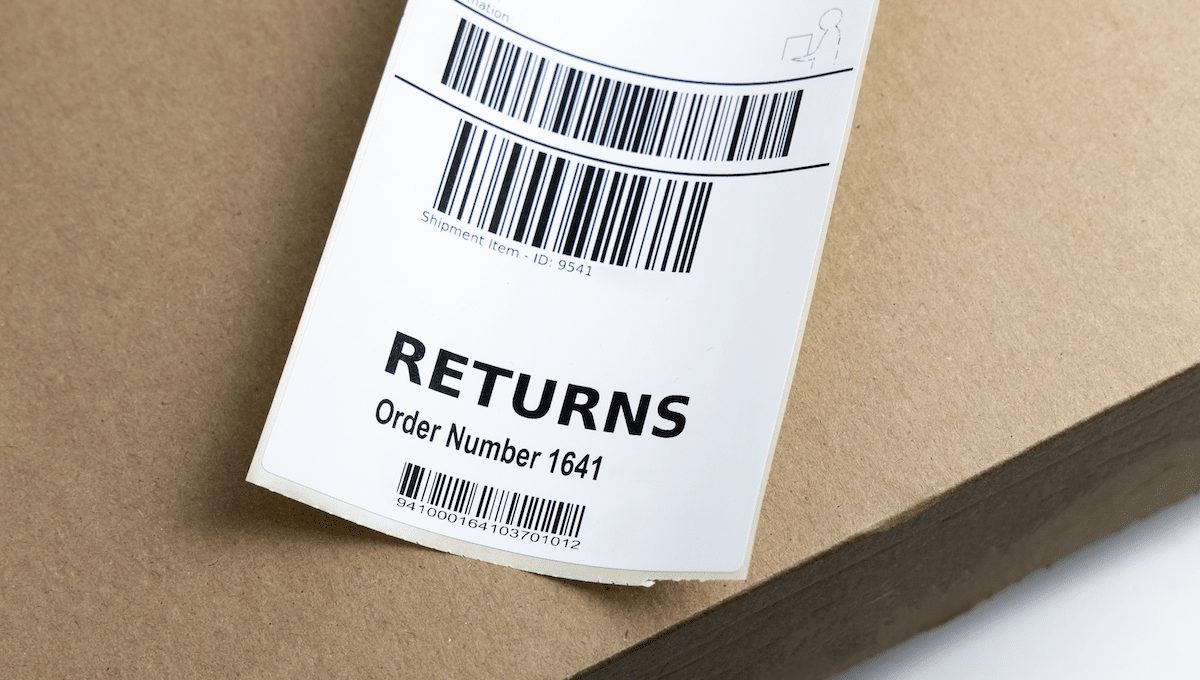

B2B delivery to offices and operational sites: 8 failure points to fix

Delivery to business addresses looks simpler than residential delivery: a site open all day, someone to sign and a clearly identified business address. In practice, B2B delivery failures often start before the parcel leaves the warehouse: incomplete site information or a mismatch between the requirement and the booked service can both cause a delivery to fail.
This playbook sets out the eight failure points behind many missed B2B deliveries, what to capture before despatch and how to match the service to the site. It then covers how to spot repeat failures and when specialist coverage or an alternative service is the answer, finishing with a checklist to work through.

Why a failed B2B delivery can be costly
When a delivery to a business site fails, the consequences can reach beyond the parcel. A consignment that does not arrive at a factory, a school or a construction site can stop a production line or hold up a project. For businesses managing high volumes of B2B parcel deliveries, failed attempts can also create additional handling, redelivery costs and customer service work.
Ofcom’s Post monitoring report 2024–25, published in December 2025, found that more than a third of small and medium-sized businesses using postal services had experienced a problem with their postal service in the previous six months. These problems included postage prices and service issues.
The eight failure points
Repeat failures often trace back to one of the following:
Incomplete site details: A company name and postcode are not an address; the driver needs the unit, building, floor and entrance before a business park with 40 units swallows the parcel
Restricted or secure access: Gates, loading bays, passes and sign-in procedures can cause a delivery to fail when the driver arrives without instructions, a contact number or the right vehicle
Goods-in opening hours and booking-in slots: Goods-in hours are often shorter than general business opening hours, and some sites refuse deliveries without a booked slot, so a service arriving at 5 pm can fail
No named recipient or authorised signatory: Reception may refuse an unexpected parcel, while a consignment left with whoever answers the door can lead to claims for missing parcels
The wrong carrier service for the consignment: A standard parcel service may not offer the timed delivery an order requires, the handling a heavy item needs or the option to deliver all parcels in a multi-parcel order together
Incomplete handover and proof of delivery data: A scan with no name, time, signature or photo cannot settle a dispute, so an invoice can sit unpaid while the issue remains unresolved
Multi-site customers with inconsistent delivery instructions: A customer with 30 branches has 30 sets of hours, contacts and access rules, yet an order placed through their central team often leaves out these delivery details
Seasonal closures and term dates: School holidays, factory shutdowns and bank holidays can send a driver to the right address at the wrong time, leaving the parcel to be returned to the depot


What delivery information to capture before despatch
Many of these failures can be prevented by capturing the right information when the order is placed. Store B2B delivery windows, access details, receiving hours and contact information in a separate record for each customer site. Use the checklist at the end of this article to check all the necessary delivery details.
How to choose the right delivery service and ensure a smooth handover
A timed delivery service costs more than a standard one, but it is often cheaper than a failed attempt. Match the service to the site: pre-noon or timed options where goods-in is restricted, two-person or tail-lift services for heavy items and consignment-level services for multi-parcel orders that must arrive together.
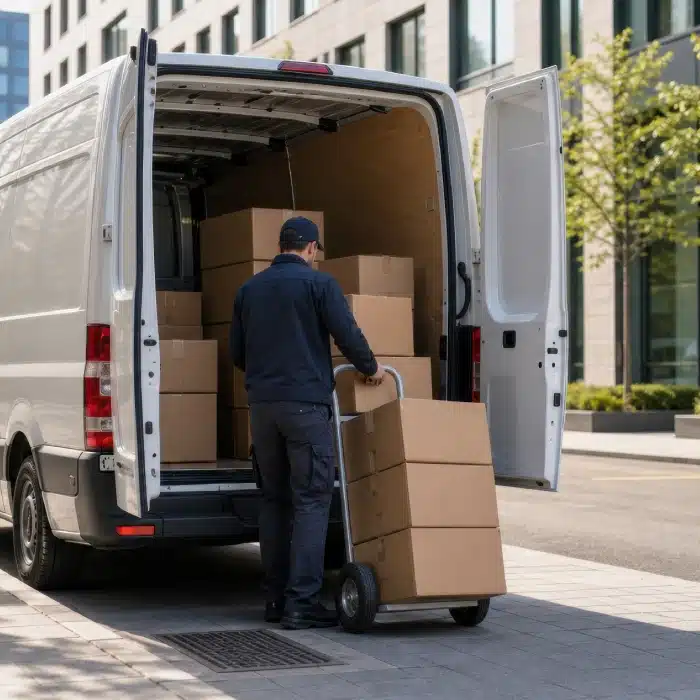
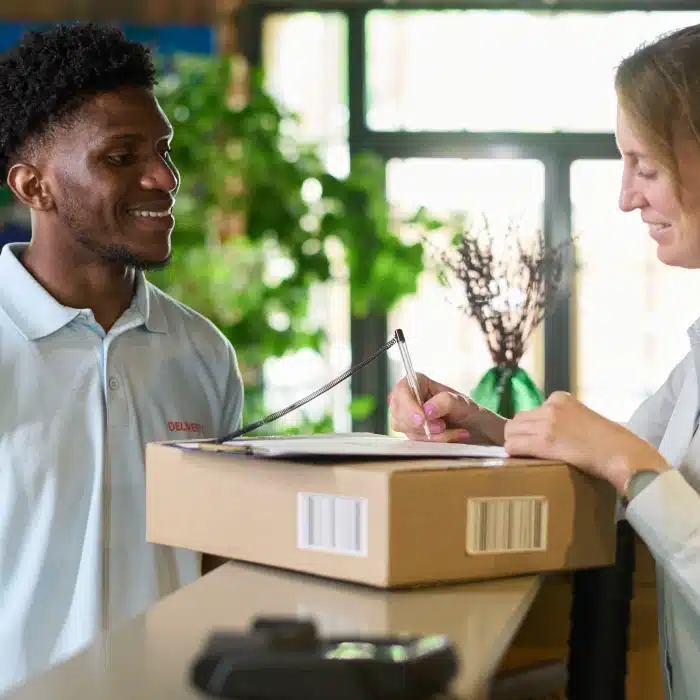
Where booking-in is required, confirm the slot before despatch. Send the goods-in contact a pre-alert with the carrier’s name, expected delivery date and consignment reference so the receiving team can prepare. Agree in advance what proof of delivery the carrier must provide: the recipient’s name, delivery time and a photo or signature. These records can help resolve any questions about whether the parcel was delivered.

How to spot recurring failures by customer, location, service and carrier
B2B exception management starts with reviewing failed and delayed deliveries by customer, location, service and carrier. Repeated failures at one site should prompt a review of its delivery information, receiving arrangements and service suitability. Failures across several carriers in the same postcode area may indicate an access or coverage issue. If failures are concentrated on one carrier’s service, review whether that service suits the site’s requirements.
A monthly review keeps B2B delivery failures from damaging the customer’s confidence in the supplier. The fix is often in the site record rather than the carrier contract.
When specialist or regional carrier coverage is the answer
Some requirements sit outside what a national parcel network does well: construction sites with no fixed address, Highlands and Islands postcodes, two-person deliveries, oversized items and high-value items. These requirements may call for a regional carrier or a specialist delivery service. The question is whether a business can access that coverage without another carrier relationship. GFS’ UK domestic delivery services give businesses access to a range of carriers through one GFS relationship.

A B2B delivery failure-prevention checklist
Use this checklist when setting up each customer site, then review the record whenever contacts, opening hours or access requirements change:
Site record: Full address with unit, building and entrance, stored against the customer site
Access: Gate codes, passes, loading bay instructions and an on-site contact number
Hours: Goods-in opening hours, booking-in reference and closure dates, including term dates
Recipient: Named recipient and an authorised signatory where the site requires one
Service: Timed, two-person or consignment-level service matched to the order, not the default
Evidence: Agreed proof of delivery requirements, including the recipient’s name, delivery time and a photo or signature
Review: Check failed and delayed deliveries each month, broken down by customer, location, service and carrier
Accurate site information always comes first. The final step is making sure the booked service can meet the requirements recorded for the site.
How Multi-Carrier routing provides a fallback when one service cannot meet the requirement
GFS is a managed Multi-Carrier delivery partner, not a carrier. Choosing a different carrier does not fix incorrect receiving hours or an unconfirmed booking-in slot, so the site record has to be right first. Where the booked service cannot meet a confirmed requirement, such as a receiving window or a handling need, GFS can support the selection of a suitable alternative, subject to service availability.
GFS’ managed Multi-Carrier delivery services combine access to 1,000+ delivery services with expert advice, capacity planning and contingency support through one partner. When a carrier cannot meet a confirmed B2B delivery requirement, GFS can help identify a suitable alternative, subject to availability, without the business having to set up a separate carrier account. Its pro-active Customer Care team also tracks parcels and works with carriers to resolve delivery issues before they affect the recipient.